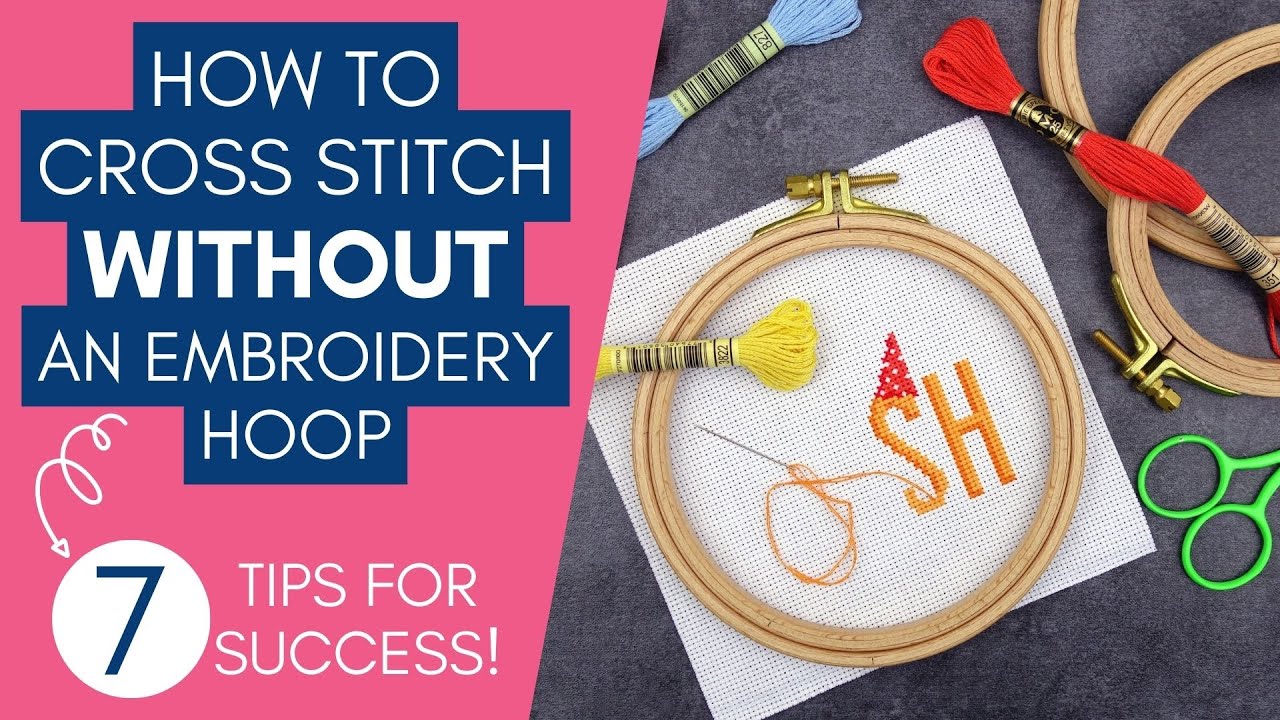
What to Use Instead of an Embroidery Hoop?
Embroidery hoop alternatives include Q-Snap clip frames, scroll frames, stretcher-bar frames and, for some projects, stitching in hand. The best choice depends on the fabric, the stitches and the size of your design. A stand can make stitching more comfortable, but it holds a hoop or frame rather than tensioning the fabric by itself.
This guide explains what you can use instead of an embroidery hoop, how each support works and when working without a hoop makes sense.
Choose an embroidery hoop alternative
| Option | How it supports the fabric | Useful for | What to check |
|---|---|---|---|
| Q-Snap clip frame | Clamps grip fabric over a tubular frame. | Cross stitch and other hand embroidery. | Clamp tension and protection for delicate fabric or stitched areas. |
| Scroll frame | Fabric attaches to rollers; roll it to expose another section. | Long projects worked in sections. | Straight mounting and whether finished stitches can safely be rolled. |
| Stretcher-bar frame | Fabric or canvas edges are secured to a wooden rectangle. | Projects that need a flat, taut working area. | Enough mounting margin and even tension. |
| Stitching in hand | Your hand supports the fabric without a frame. | Some outline, stem and chain stitching. | Even thread tension and whether the fabric puckers. |
| Lap, table or floor stand | Holds a compatible hoop or frame. | Working with both hands free. | Holder compatibility; a stand alone does not tension fabric. |
Why You Might Want to Stitch Without a Hoop
Some simple line stitches can be worked in hand, provided you keep the thread tension even. For many surface-embroidery projects, a hoop or frame makes the fabric easier to control, especially when you are learning. Dense stitching and goldwork generally need stable, taut support; a flat surface on its own does not provide that tension.
If you are choosing embroidery kits for adults or kits for beginners, check the actual contents before choosing a support: a hoop may be included, optional or excluded.
1. Embroidery Frames and Stands
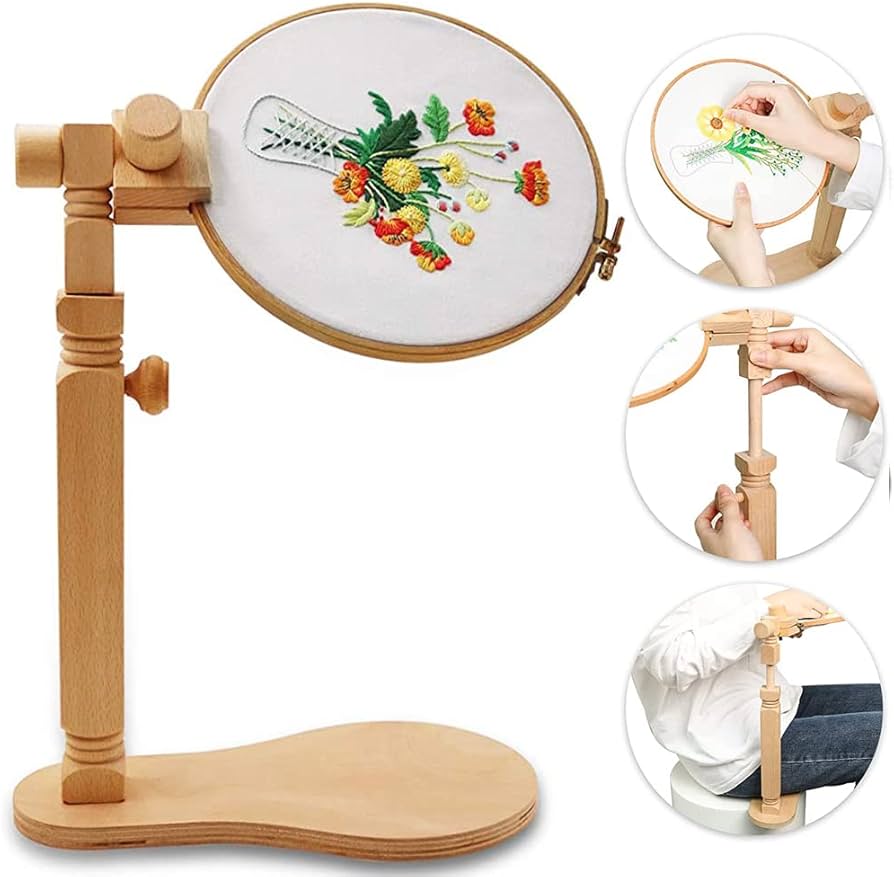
An embroidery frame is one of the best alternatives to a hoop. Unlike round hoops, frames stretch the fabric across a rectangular or square surface, allowing for even tension across a larger area.
Advantages:
- Great for larger projects
- Helps prevent fabric distortion
- Supports a working area larger than a small round hoop
A lap, table or floor stand holds a compatible hoop or frame, freeing both hands for stitching. The hoop or frame still controls fabric tension. Check that the holder fits your support and lets you reach the back of the work.
2. Scroll Frames
A scroll frame consists of two rods and sidebars that hold the fabric rolled between them. This allows you to adjust and work on different sections of your project without constantly rehooping.
Why it works:
- Ideal for long or continuous designs
- Lets you expose a new working section by rolling the fabric
- Easy to tighten or loosen as you go
Attach the fabric straight and check the tension after rolling. Plan around raised stitching, beads or metallic work that should not be compressed on the rollers. Follow the frame maker’s instructions for your attachment system.
3. Q-Snap Clip Frames
Q-Snap frames are modern, lightweight, and simple to use. They are made of interlocking plastic tubes that form a square or rectangular frame. The fabric is stretched across the frame and secured with plastic clips.
Benefits:
- Uses adjustable clamps to grip the fabric
- Lightweight and portable
- Suitable for both beginner embroidery kits and complex designs
Clip frames and scroll frames are different systems. A Q-Snap grips fabric with clamps rather than rolling it between two rods. Its manufacturer recommends a muslin layer to protect delicate fabric or finished stitching; do not assume any clamp is guaranteed to leave no marks.
4. Stretcher-Bar Frames
Stretcher bars form a wooden rectangle that holds the whole working area open. Fabric or canvas edges are secured to the bars with suitable tacks. Leave enough mounting margin and tension the fabric evenly without pulling the weave out of shape. This is a support for stitching; mounting finished embroidery for display is a separate job.
Why it’s a great option:
- Keeps the full working area accessible
- No re-hooping required
- Useful for canvaswork and suitable surface embroidery
For finishing a completed project, see our guide to framing embroidery rather than assuming the working frame is the final display frame.
5. Embroidery on Felt or Thick Fabric Without Support
A small motif on felt or another stable fabric may be manageable in hand, but thickness alone does not guarantee good tension. Try a few stitches on an offcut. If the fabric distorts or the stitches pull it into folds, use a suitable hoop or frame and ease the thread tension.
Tips for success:
- Use shorter stitches to maintain neatness
- Keep your thread tension consistent
- Rest your hand lightly to avoid stretching the fabric
This approach works well for small motifs, patches, or embellishments on clothing or bags.
6. A Quick Setup Without Buying a Hoop
For a small practice design, try stitching in hand on a stable fabric. A loose craft ring or an unmodified plastic lid does not grip fabric like a two-ring embroidery hoop. Choose a support that actually holds the fabric securely rather than relying on a makeshift shape alone.
7. Embroidery in Hand (Without Any Frame or Hoop)
Many stitchers enjoy the freedom of embroidering directly in hand. This technique involves holding the fabric gently while stitching, without using any tensioning device.
Advantages:
- No need for extra tools
- Offers direct control and flexibility
- Ideal for quick, simple designs
For best results, use smaller pieces of fabric and keep your stitches even. If you’re new to embroidery, starting with a beginner embroidery kit can help you practice this technique easily.
Tips for Working Without a Hoop
If you choose to skip the hoop, here are a few things to keep in mind:
Choose the right fabric: Try a stable fabric suited to your stitches.
Keep your fabric clean: Wash your hands before working to prevent marks or oils from transferring.
Use a stabilizer: A suitable stabilizer can help support thin or stretchy fabric. Test the fabric and stabilizer together first.
Finish according to your materials: Follow the fabric and thread care instructions. Do not press raised stitches, beads or metallic details flat. If your work puckers, review our guide to fixing puckering in embroidery.
Questions About Embroidering Without a Hoop
How do I keep fabric taut without an embroidery hoop?
Use a clip frame, scroll frame or stretcher-bar frame sized for the project. Mount the fabric squarely and adjust tension without distorting the weave. In hand, you support the fabric yourself; keep the thread relaxed enough that it does not pull the cloth into puckers.
Can I use a stand instead of a hoop?
A stand needs a compatible hoop or frame to hold. It changes how you support the project and can free both hands, but it does not independently stretch the fabric.
Do I need a hoop for chain stitch?
Chain stitch can be worked in hand, although many beginners find a hoop or frame easier to control. Start with a small practice line and follow our chain stitch tutorial.
Choose Support for Your Next Project
Use the comparison above to match a support to the design, fabric and working area. If the main problem is pressure marks rather than the hoop’s shape, read how to fix hoop burn marks on fabric. For a completed piece, move on to framing and finishing embroidery.
Further technique guidance: DMC’s hoop guidance, Q-Snap’s fabric-protection tip and the Embroiderers’ Guild of America’s crewel and surface embroidery guide.

2 Comments