Embroidery vs Cross Stitch: Which Is Easier and Better for You?
Cross stitch is a form of embroidery. In an embroidery vs cross-stitch comparison, people usually mean freestyle surface embroidery versus counted cross stitch. Surface embroidery follows drawn lines or freely placed stitches; counted cross stitch follows a chart on a fabric grid.
Choose by how you prefer to work: counting squares and repeating crosses, or following outlines and learning different stitches. Both have simple beginner projects and more demanding designs.
Embroidery vs cross stitch: the main differences
| Feature | Surface hand embroidery | Counted cross stitch |
|---|---|---|
| Place in needlework | A form of embroidery | Also a form of embroidery |
| Stitch placement | Follow transferred lines or place stitches by eye | Count squares on a chart and match them to the fabric grid |
| Typical fabric | Fabric suited to the design, often cotton or linen | Aida or suitable evenweave fabric |
| Typical needle | A sharp embroidery needle to pierce the fabric | A blunt tapestry needle through existing fabric holes |
| Stitches | Outlines, fills and knots | Mainly crosses; patterns can also include backstitch, fractional stitches or other details |
| Beginner project | A small outlined design with a few basic stitches | A small chart with few colours and straightforward full crosses |
What is surface embroidery?

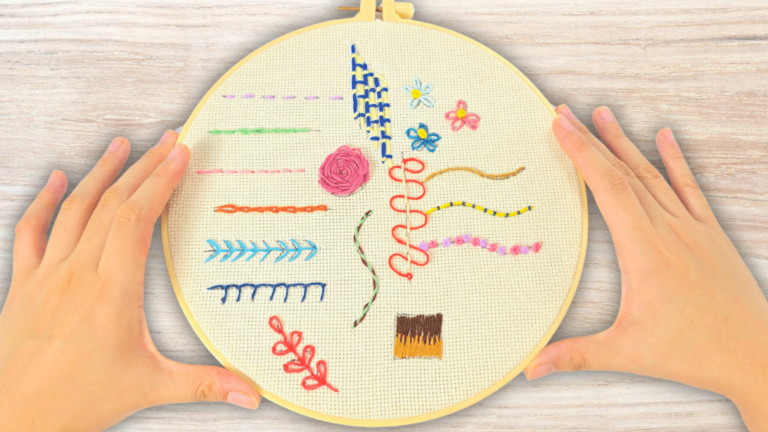
Surface embroidery decorates fabric with stitches placed independently of a counted grid. You can work from a printed or transferred pattern, sketch your own outline or combine techniques in one design.
Backstitch makes an outline, satin stitch fills a shape, and French knots create small raised details. Crewel embroidery uses wool thread. These are different stitch or technique choices within the larger embroidery family.
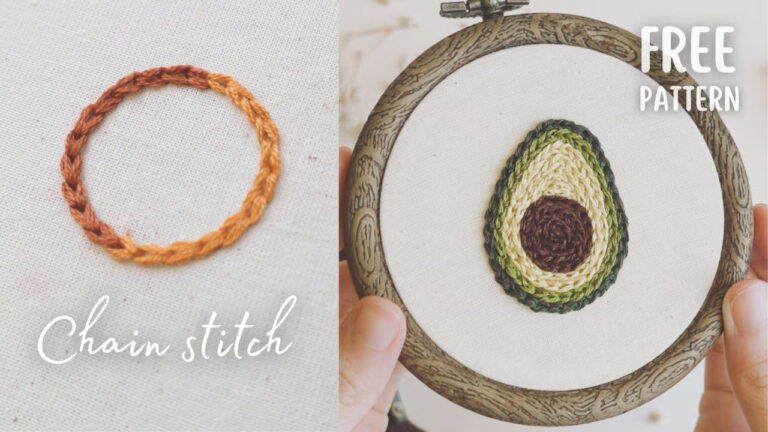
Start with one or two stitches before adding more. Our chain-stitch tutorial is a useful next lesson for stitched outlines.
What is counted cross stitch?

Counted cross stitch uses X-shaped stitches arranged according to a chart. Symbols show the thread colours, and chart squares show stitch positions. Aida has a visible grid that can make locating the holes easier for beginners; evenweave is another option.
Some cross-stitch kits have the design printed on the fabric. That is different from following a counted chart on plain fabric, so check which type a kit contains before buying.
A cross-stitch pattern may use more than full crosses. Check its key for backstitch, fractional stitches, knots and strand counts before starting.
Is cross stitch or embroidery easier?
Neither is always easier. A small cross-stitch chart with a few colours can suit someone who enjoys counting and repeating a stitch. A simple surface-embroidery pattern can suit someone who prefers following an outline. Large charts, frequent colour changes, dense fills and unfamiliar stitches can make either project harder.
For a first project, choose clear instructions and a small design you want to finish. Look for readable diagrams, the required materials and an explanation of how to start and secure the thread.
Tools and materials
For surface embroidery
- Fabric and a printed or transferred pattern
- A suitable embroidery needle
- Thread in the colours and strand counts recommended by the pattern
- A hoop or frame if the technique needs tension, plus small scissors
For counted cross stitch
- Aida or evenweave in the fabric count specified by the pattern
- A suitable tapestry needle and embroidery floss
- A chart, colour key and stitch instructions
- Small scissors and any support recommended for the project
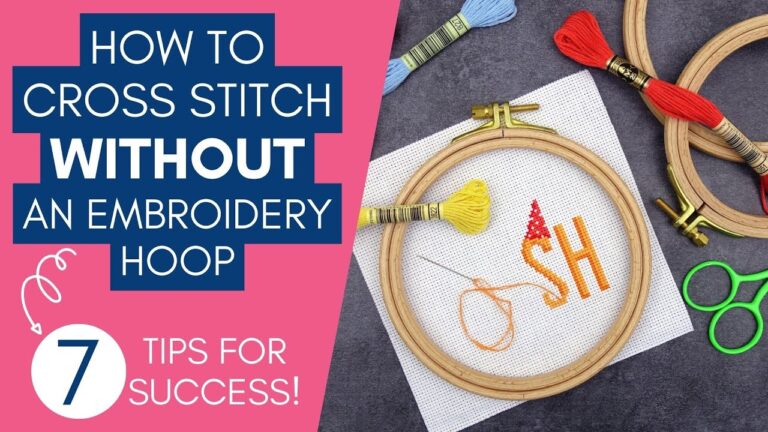
You do not need a large collection of specialist supplies to try either technique. If a hoop is awkward for your project, compare embroidery hoop alternatives before choosing another support.
Time, cost and finished projects
Time depends on the stitched area, coverage, colours and difficulty—not simply whether a project is cross stitch or surface embroidery. Compare the full kit contents and finishing materials when estimating cost.
Both techniques can produce framed art, ornaments and personal gifts. Surface embroidery is also useful for decorating an existing garment or fabric item. Choose a ground and thread appropriate for its intended use. For display, see how to frame embroidery.
How to start a beginner project
Surface embroidery
- Choose a small pattern with a few clearly explained stitches.
- Prepare the fabric and transfer the pattern if required.
- Fit the support recommended for the technique without distorting the fabric.
- Practise each stitch on a spare piece before working the design.
- Keep thread tension even and secure the ends as the instructions show.
Counted cross stitch
- Check the fabric count, chart symbols and required strand count.
- Locate the pattern’s starting point and leave enough fabric around the design for finishing.
- Count carefully from an established stitch to the next section.
- Keep the top arms of full crosses facing the same direction for a consistent appearance.
- Secure the thread ends neatly and check the chart as you work.
Common mistakes
- Miscounted cross stitches: recheck the chart and nearby completed stitches before continuing a new area.
- Puckered fabric: avoid pulling the thread so tightly that it draws the fabric together.
- Twisted floss: pause and let the thread untwist rather than forcing a tangled stitch.
- Wrong materials: use the fabric, needle and strand count required for the pattern.
Frequently asked questions
Is cross stitch the same as embroidery?
Cross stitch is one kind of embroidery. It is not identical to every embroidery technique, just as needlepoint is another member of the same family. See our embroidery vs needlepoint guide for that comparison.
Can I use the same embroidery floss for both?
Stranded cotton is used in both, but follow each pattern’s strand count. The same thread does not mean the same needle, fabric or stitch instructions will work for every project.
Do I need to learn cross stitch before hand embroidery?
No. Start with whichever technique and small project appeal to you. Thread handling and tension practice can help in both, but one is not a required first step for the other.
Choose your first project
If you like a counted grid, try a small cross-stitch chart. If you like drawn outlines and varied stitches, try a simple surface-embroidery pattern. Browse our beginner kit collection and check the technique and contents of each listing.
Technique references: Royal School of Needlework: cross stitch; DMC’s guides to cross-stitch fabric, reading a chart and hand embroidery.