Embroidery vs Needlepoint: The Complete Guide for Stitching Enthusiasts
Needlepoint is a type of embroidery worked on open-mesh canvas. When people compare embroidery vs needlepoint, they usually mean surface hand embroidery on fabric versus needlepoint on canvas. The main differences are the ground material, where you place the stitches and the tools you use. Both belong to the embroidery family.
This guide compares those two approaches so you can choose a manageable first project. Cross stitch is another form of embroidery; see our embroidery and cross-stitch comparison if you prefer working from a counted chart.
Embroidery vs needlepoint at a glance
| Feature | Surface hand embroidery | Needlepoint |
|---|---|---|
| Ground material | Fabric such as cotton or linen | Open-mesh canvas with regular holes |
| Stitch placement | Follow a transferred outline or place stitches by eye | Use the canvas mesh with a counted chart or painted design |
| Typical needle | A sharp embroidery or crewel needle to pierce the fabric | A blunt tapestry needle that passes through the canvas holes |
| Stitches | Outlines, fills and knots, including backstitch, satin stitch and chain stitch | Tent stitch and many decorative canvas stitches |
| Thread | Stranded cotton and other threads suited to the fabric and stitch | Wool, cotton, silk or other thread suited to the canvas mesh |
| A good first project | A small outlined design with a few basic stitches | A small canvas with clear instructions and a limited colour palette |
What is surface hand embroidery?
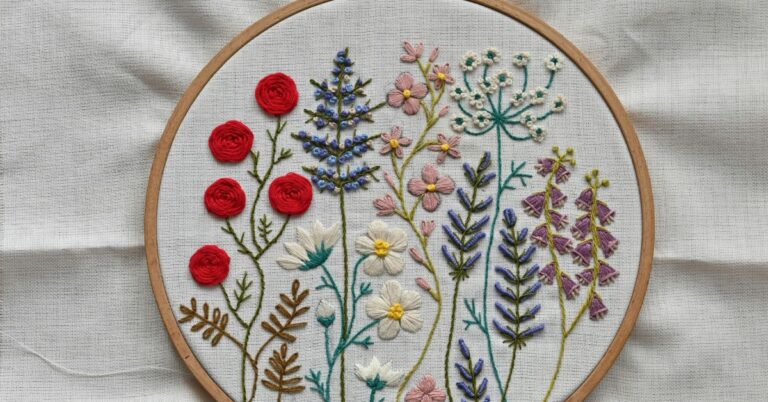
Embroidery is the broader craft of decorating a ground with needle and thread. Surface embroidery places stitches on fabric without requiring every stitch to follow a counted grid. A design can leave the background visible, fill an area densely or combine flat stitching with raised details.
Common materials include cotton or linen fabric, embroidery floss, a suitable needle, small scissors and a hoop or frame. The pattern may be printed on the fabric or transferred before stitching. Chain stitch is one useful outline stitch to learn.
What is needlepoint?
Needlepoint, also called canvaswork, uses an open-weave canvas. The holes guide stitch placement. You can follow a counted chart or work from a painted or printed canvas; needlepoint is not limited to counted charts.

Tent stitch is a common starting stitch. Continental and basketweave are ways of working tent stitch, and needlepoint also includes decorative stitches beyond these basics. Many designs cover the canvas, but coverage depends on the design rather than a rule that every hole must be filled.
Which is easier for beginners?
Either can be beginner friendly. A small surface-embroidery design with two or three stitches may suit you if you enjoy following drawn lines. A small needlepoint canvas may suit you if you prefer a visible grid and repeating stitches. The size, instructions and number of colours matter more than the name of the craft.
Check what a kit includes before choosing it: fabric or canvas, thread quantities, a needle, a readable pattern and instructions for finishing. Avoid choosing a large, detailed design as your first project simply because it uses one familiar stitch.
Tools, cost and time
Surface embroidery supplies
- Fabric appropriate for the design
- A suitable sharp embroidery needle and thread
- A hoop or frame when the technique needs tension
- Small scissors and a printed or transferred pattern
Needlepoint supplies
- Canvas in a mesh size appropriate for the design
- A tapestry needle and thread matched to that mesh
- A chart or painted canvas and stitch instructions
- A frame if recommended for the project, plus finishing materials
Compare the complete supply list rather than assuming embroidery is always cheaper. Canvas size, thread type, kit contents and finishing can change the total substantially. Likewise, a small needlepoint design can take less time than a dense surface-embroidery design. Project area, coverage and stitch complexity determine the workload.
Choose the craft for the finished item

For decorating an existing garment or a piece of fabric, surface embroidery is a practical starting point. For a canvas-based cushion, belt or framed design, explore needlepoint. Durability depends on the ground, thread, construction and intended use; neither technique is automatically more durable.
Both can make detailed pictures and both allow creative choices. Canvaswork is not restricted to geometric patterns, and surface embroidery need not be freehand. Choose a design you like with instructions that fit your experience.
Common mistakes to avoid
- Pulling too tightly: this can pucker fabric or distort canvas. Aim for even tension.
- Using unsuitable thread: follow the pattern’s strand count or canvas-thread recommendation.
- Choosing by project size alone: a small design can still contain difficult stitches or frequent colour changes.
- Ignoring finishing: plan whether the piece will be framed or made into a usable item before trimming the ground.
For display, read our guide to framing embroidery. Keep glass clear of the stitches, and choose cleaning methods for the actual fibres and dyes rather than treating every embroidered piece as washable.
Frequently asked questions
Is needlepoint the same as embroidery?
Needlepoint belongs to the embroidery family. In everyday comparisons, “embroidery” often means surface hand embroidery on fabric, while needlepoint means embroidery on canvas.
Can I use embroidery floss for needlepoint?
Some needlepoint patterns use stranded cotton. Use the number of strands and needle recommended for the canvas mesh and pattern. A thread that works on fabric may not give the coverage you want on a particular canvas.
Can I use the same needle for both?
Usually the jobs call for different needles: a sharp embroidery needle pierces fabric, while a blunt tapestry needle passes through existing canvas holes. Choose the size for your thread and ground.
Do I need a hoop for needlepoint?
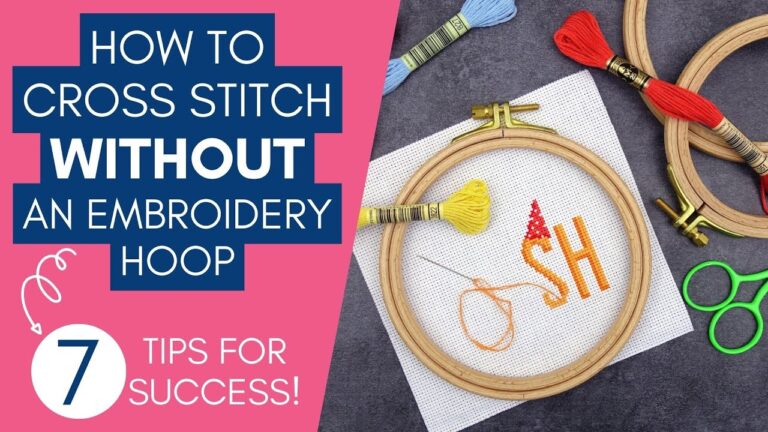
Canvas is often supported by a suitable frame. Follow the project’s instructions rather than assuming a fabric hoop is the right support. Our hoop alternatives guide explains the differences between common supports.
Where to start
Pick a small project with a clear pattern and few colours. Choose surface embroidery for drawn outlines and varied stitches, or needlepoint for stitching on a visible canvas mesh. You do not need to master one before trying the other.
Technique references: Royal School of Needlework: canvaswork, Needlepoint.com: beginner basics, and DMC’s embroidery needles and cross-stitch/tapestry needles.